Premium Mahjong Sets 2026: When $200+ Tiles Are Worth It
Premium mahjong sets cost $200-2,000+. We explain when paying more makes sense, what you actually get, and the four price tiers worth knowing about.
Premium mahjong sets cost between $200 and $2,000+. The premium tier breaks down into four distinct value zones: $200-400 boutique tiles, $400-800 designer sets, $800-1,500 hand-painted artisan sets, and $1,500+ automatic mahjong tables. The price-to-quality curve flattens sharply above $400, most players who pay more are buying aesthetic value, not gameplay improvement.
This guide explains what you get at each price tier, when it’s worth paying more, and what to skip.
The Four Premium Tiers
| Tier | Price | What You Get | Worth It For |
|---|---|---|---|
| Boutique tiles | $200-400 | Hardwood case, premium tile feel, designer aesthetics | Players hosting weekly games who want presentation |
| Designer sets | $400-800 | Branded cases, unique tile faces, gift-quality packaging | Gifts, collectors, players who want personality |
| Artisan sets | $800-1,500 | Hand-painted tiles, leather cases, limited editions | Serious collectors and high-end home decor |
| Automatic tables | $1,500+ | Auto-shuffling, wall-building, tile dealing | Players who play 3+ times per week |
The biggest gameplay upgrade is jumping from a $50 set to a $150 set. The biggest aesthetic upgrade is jumping from $150 to $400. Past $400, you’re paying for status, brand, or material exotica, none of which makes the game more fun.
Featured Premium Picks
| Feature | 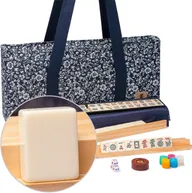 Yellow Mountain Imports American Mahjong Set - Santorini Best Overall Yellow Mountain Imports American Mahjong Set - Santorini Best Overall | 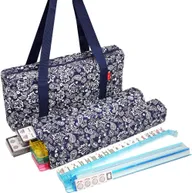 Linda Li American Mahjong Set - Blue Paisley Best Design Linda Li American Mahjong Set - Blue Paisley Best Design | 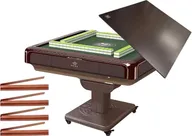 USA MJ Table Automatic Mahjong Table - 36mm American Style Best for Serious Players USA MJ Table Automatic Mahjong Table - 36mm American Style Best for Serious Players |
|---|---|---|---|
| Price | $175.99 | $199.99 | $1,159.99 |
| Rating | 4.5/5 | 4.6/5 | 4.5/5 |
| Buy on Amazon | Buy on Amazon | Buy on Amazon | |
| Category | Mahjong Set | Mahjong Set | Table |
| Best For | American mahjong players looking for the best overall set at a fair price | Players who want a stylish set that looks as good as it plays | Dedicated American mahjong players who host regular weekly games |
| Pros |
|
|
|
| Cons |
|
|
|
Tier 1: Boutique Tiles ($200-400)
This is the sweet spot for premium without overspending. At this price, you get a meaningful upgrade from a budget set: hardwood cases instead of vinyl, larger 32mm tournament-size tiles, premium engravings, and complete accessory kits including high-quality scoring coins and dice.
What you should expect at this tier:
- 32mm tile size (standard tournament size)
- Real hardwood case with brass corners
- Engraved tiles with deep cuts and saturated colors
- Premium accessories: brass scoring coins, polished dice
- Lifetime durability, this set will outlast your interest in the game
What it does NOT improve over a $150 set:
- Gameplay feel is identical
- Tile click sound is similar
- Reading speed is the same
- Win rate or fun is unchanged
The reason to pay $200-400 is presentation. If you host a weekly mahjong group, a beautiful set on the table elevates the entire experience. If you play alone or with one regular partner, the gameplay difference doesn’t justify the cost.
Recommended: Yellow Mountain Imports Santorini ($155) is our top pick. If you want to spend more, look at YMI’s Tournament series ($280-320) for the hardwood case upgrade.
Tier 2: Designer Sets ($400-800)
At this tier, you’re paying for branding and unique tile face designs. Designer sets are usually limited editions, made in smaller quantities, and shipped in gift-quality packaging that signals premium.
What changes versus boutique tiles:
- Custom tile face artwork (paisley, floral, modern minimalist)
- Branded cases with logos and presentation features
- Better customer service and packaging
- Often sold direct rather than through retail
The Linda Li Blue Paisley set lives at the top of this range. Specialty manufacturers like Where the Winds Blow and Modern Mahjong sell sets in the $400-700 range with unique designs that you won’t find on Amazon.
When it’s worth it: You play often, value aesthetics on the table, and want a set that looks distinctly yours. Or you’re buying it as a gift, the packaging matters.
When to skip it: You play casually or just need a working set. The visual difference is real but won’t change how much you enjoy the game itself.
Tier 3: Artisan Sets ($800-1,500)
This is collector territory. Artisan sets are hand-painted by individual artists, made in batches of 50-100, and often sold directly by the artisan via personal websites or commissioned orders. Each set is slightly different.
What you get:
- Hand-painted tile faces with brushstroke variation
- Leather or premium hardwood cases
- Custom-engraved name plates or commission inscriptions
- Limited edition numbering (e.g. 47/100)
- Direct contact with the artist for repairs or extensions
These sets exist primarily as art objects. Players who buy them rarely take them traveling and often display them in cabinets between sessions. The tiles play perfectly fine, but you’re not buying them for gameplay.
When it’s worth it: You’re a serious collector, you have the budget, or you want a generational heirloom set. Some artisan sets appreciate in value over decades.
When to skip it: Anything else. This tier is genuinely niche.
Tier 4: Automatic Mahjong Tables ($1,500+)
The biggest single upgrade in mahjong is moving from manual shuffling to an automatic table. These tables shuffle, build the wall, and present tiles automatically, eliminating the longest friction point in the game.
What you get:
- Auto-shuffling mechanism (60-second cycle vs 5-minute manual shuffle)
- Auto-wall-building (no more counting and stacking)
- Tile presentation system that hides tile values until drawn
- Quiet operation (60-70 dB versus 100+ dB hand shuffling)
- Full table footprint (~3 feet by 3 feet)
The included tiles are usually the table manufacturer’s own tile set, which varies in quality. Some auto-table tiles are premium; others are merely adequate. Read tile-specific reviews before assuming the table includes good tiles.
When it’s worth it: You play 3+ times per week, host regular game nights, or want to play more games per session (auto-shuffling lets you play 3-4 hands per hour instead of 1-2). The tables pay for themselves in saved time over a year of regular play.
When to skip it: Casual players who play monthly. The investment doesn’t make sense for occasional sessions.
What’s NOT Worth Paying For
A few common premium upgrades don’t justify their price:
Acrylic tiles ($300-500 over melamine). Acrylic tiles look beautiful and are translucent, but they play identically to melamine. The premium is purely aesthetic.
Bamboo or bone tiles ($800-1,500). Traditional bamboo tiles are stunning but require careful storage to prevent warping. Modern melamine plays better in real-world conditions.
Custom inscriptions or initials ($100-300 add-on). Personal touch, but you’re paying for engraving labor on top of an already-expensive set.
Limited-edition collaborations. Some boutique sets ship with celebrity branding or pop-culture themes. The brand premium adds 30-100% to the cost without changing the game.
Frequently Asked Questions
Are premium tiles really better than $80 sets? Better in feel, durability, and aesthetics, not in gameplay. The $80 YMI Huntington plays the same game as a $400 boutique set. Premium adds presentation, not function.
Should I get a premium set for my first purchase? No. Buy a $75-155 set first to confirm you’ll enjoy mahjong long-term. If you stick with the game for a year, then upgrade to premium. Don’t spend $400+ on a set that might collect dust.
What’s the most premium set under $250? The YMI Tournament series at $200-250 is the best premium-without-overspending option. Real hardwood case, 32mm tiles, complete accessories. Equivalent gameplay to $400 sets at half the price.
Are automatic mahjong tables actually worth $1,500+? For weekly players, yes. They eliminate 4-5 minutes of shuffling per hand, letting you play 50% more hands per session. After a year of weekly play, the math works out. For casual players, absolutely not.
Do any premium sets come with red fives? Standard American premium sets do not include red fives, that’s a Japanese riichi feature. If you want premium riichi tiles with red fives, look for Yellow Mountain Imports’ Japanese line or AMOS premium sets.
Where can I buy artisan mahjong sets? Direct from the artist. Search “handmade mahjong set” on Etsy or specialty sites. Most artisans run waiting lists and accept commissions. Expect 4-12 weeks for delivery.
What to Buy
If you want a premium set that’s not financially absurd, the YMI Santorini at $155 is the best balance. If you want true premium presentation, the Linda Li Blue Paisley adds aesthetic depth. And if you play 3+ times a week and have the space, the automatic mahjong table transforms the game in ways no tile upgrade can.
For full context on the broader market, see the complete mahjong sets buying guide covering all price tiers from budget to premium.